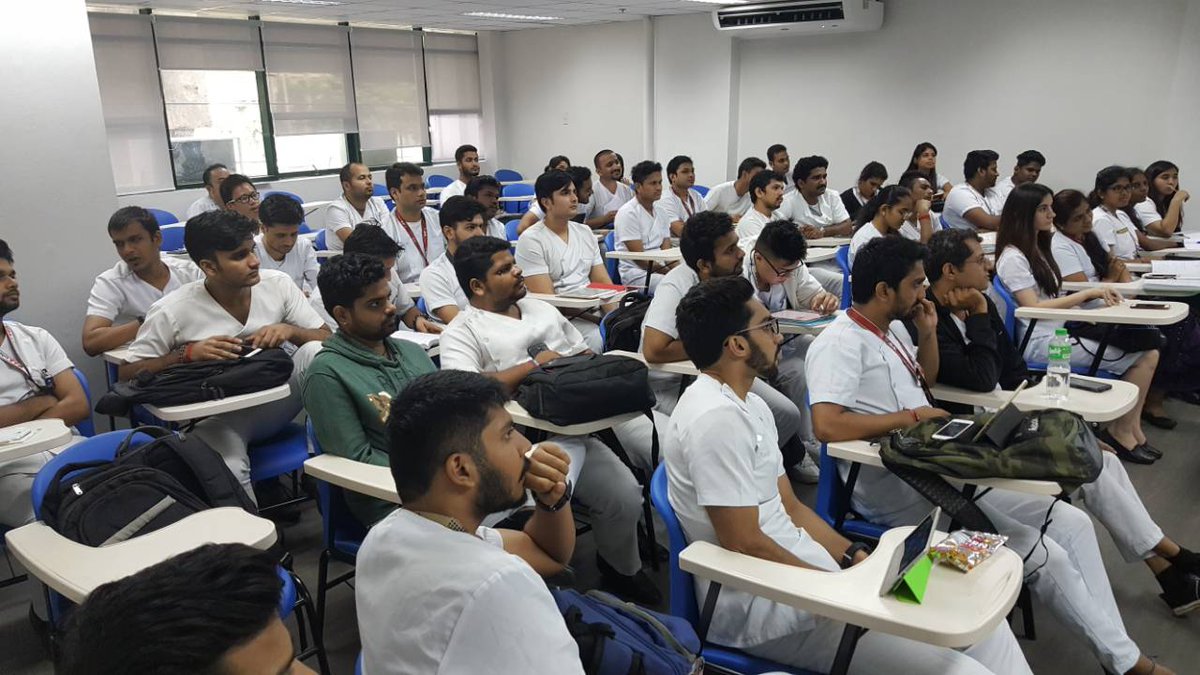
A university education imparts social skills to students, which leads to positive social behaviour. With social skills in their back pocket, students can better identify with peers, teachers, parents and the public. Social skills are promoted when teachers encourage their students to look beyond the classroom and engage in networking activities.
Today, the benefits of higher education for students are crucial to equipping them with the emotional benefits of meeting daily challenges. Students develop outstanding problem solving and emotional management skills during their studies. No matter what day, faculty and staff expect students to shed their emotions and focus on the academics.
It prepares you for your career and your adult life. The benefits of higher education include career opportunities in well-paid, high-skill jobs, and studies show that it leads to overall happiness and stability.
There are many benefits Cagayan State University College of Medicine and Surgery of higher education, including economic, personal and social benefits. Higher education often correlates with higher incomes, because people tend to earn more money with higher education levels than without. Higher incomes are a good reason for a college degree, but not the only one.
The survey did not answer how the educational differences were explained. These differences may reflect additional knowledge and skills that have been developed through better education. They agree with recent findings that a college degree is a 7.5% pay premium ($33,000 a year) compared to a high school degree.
Higher education is also closely linked to what we perceive as good citizenship. People with higher levels of education have higher rates of choice, volunteering and blood donation, according to a College Board report. This type of activity tends to benefit society as a whole.
It remains fashionable for experts to question the value of higher education, especially at a time when higher education is rocked by scandals. But the data remain true that college delivers the comprehensive benefits most Americans want. What is clear is that those with tertiary education overall have a greater sense of well-being, self-efficacy and financial well-being.
Graduates tend to have higher participation in political and nonprofit affairs, volunteering, and charitable giving. Graduates also tend to be healthier, with a lower risk of heart disease and a tendency to eat healthily, exercise, smoke and live longer. Looking at income, the research is clear: college graduates earn more than their college-educated counterparts.
Colleges give you a wide range of skills, and many graduates end up in areas that were not what they studied at school. Colleges offer unexpected opportunities to those who would otherwise not have been able or willing to engage in higher education.
This is particularly valuable for those who already have a university degree. In fact, staff training is so important to companies that they often pay for staff training. A university degree can be seen as an investment that brings significant benefits not only to the employee, but also to the company. [Sources: 1]
If you’re ready to take the next step in your education, look at the college degrees that universities offer to people. There are more benefits of education than we can enumerate here, but it is not hard to find the benefits you need in your life.
Education is often seen as a golden ticket to a better life, but many young people do not need the perfect age to reach higher education. For various reasons, students are driven by an interest in the benefits of the institutions surrounding them. With the massive reduction in funding for colleges and universities, education has become less available to the general public due to rising costs. While this may seem like a reasonable stance, some argue that education is provided not for individuals, but for society.
Education is of the utmost importance in improving the lives of individuals and enabling society to develop and prosper. When a nation’s citizens are better educated, they see an overall improvement in the quality of life and in their societies.
This paper examines research into the broader societal benefits of higher education and the data and methods that underpin it. It focuses on the benefits for society as an individual, but the social benefits are also interwoven with the broader benefits that are being discussed. In tertiary education, there has been a shift to private spending, accompanied by a shift away from public subsidies to the students themselves. This shift implies the message that higher education is a private, not a public, asset that belongs to the individual student, not to society.
At the individual level, there is evidence of the causes and consequences of social capital. However, this paper notes that little research has been done in Australia to understand the broader social benefits of higher education, which are considered important for policy development. Longitudinal data exist to expand and make usable this research.
England is looking for a direct return on public investment in higher education. With tuition fees in England set to rise to £9,250 this autumn and interest rates on loans rising from 4.6% to 6.1%, students are demanding a return on what they get for their investment. Jo Johnson, Minister for Universities, Science, Research and Innovation, has called on the Office for Students, a new regulator to be launched in 2018, to look at binding contracts between universities and students. The aim is to ensure consumer protection with regard to the quality of teaching.
The bottom line is that if you live in a university town or city, chances are you will reap the rewards. Recent research by universities across the UK shows that such economic impacts are more pronounced in smaller cities. Large landowners of universities are important investors in the built environment.
 Arun Kumar